Carl’s paper appeared online!

Carl’s paper in Advanced Optical Materials was published online today!

carlspaperAs the paper was published as an open access paper (like many other papers from the FRG), feel free to click on the link and download the paper free of charge! Great collaborative effort from all those involved – well done!

Carl’s paper accepted!

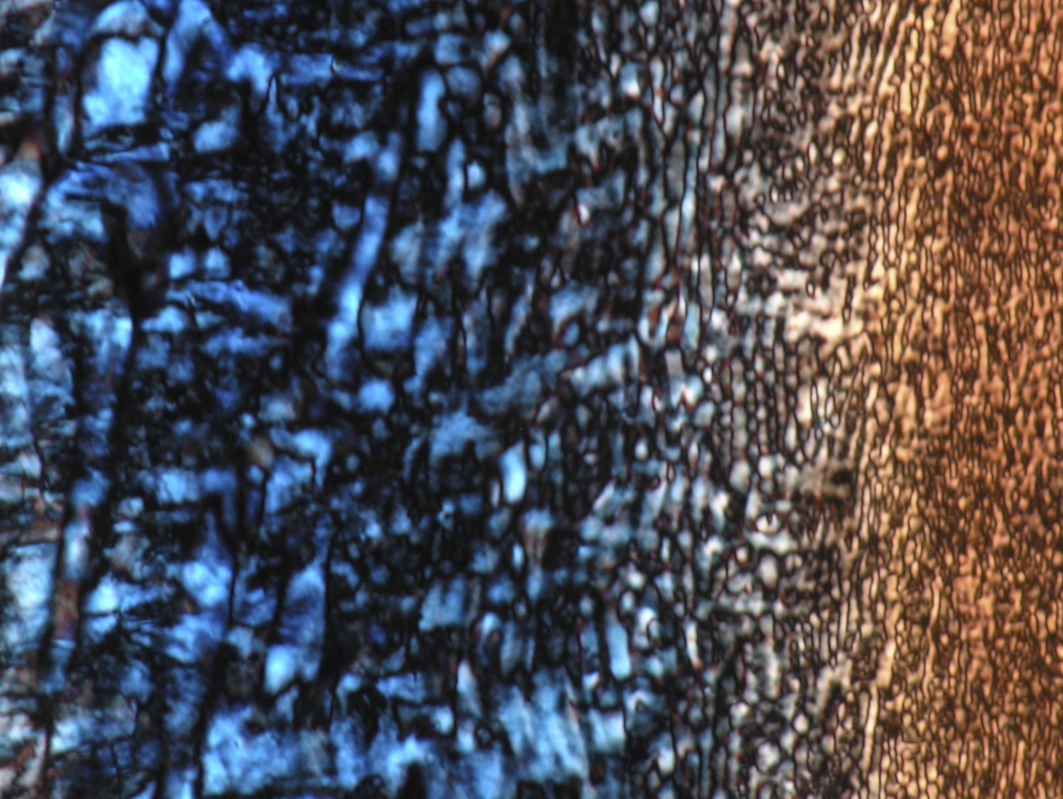
Exciting news – Carl’s paper on switchable photonic structures from 3D printed oligo(aniline)-based materials has been accepted for publication in Advanced Optical Materials.

carltapstThis project, with collaborators from the School of Physics (Henkjan and Ben) and Electronic Engineering (Daniel, Lifeng, Mike and John), explored  the use of 3D printing and actively switchable redox-active oligo(aniline)-based materials to create novel tuneable 3D photonic materials.  Well done to Carl, and all our collaborators!


Ben’s paper accepted for CEJ!

Ben’s paper was very recently accepted by Chemistry – A European Journal as a very important paper!  This investigation, done in collaboration with Natalie Fey (Bristol), Patrice Rannou (Grenoble, France, and long-standing collaborator) and Tomasz Marszalek and Wojciech Pisula (Mainz, Germany and Lodz, Poland).

3armstar

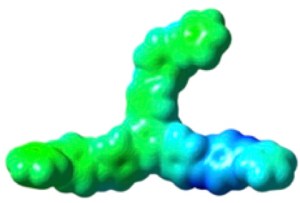
Here we show that a redox-active star-shaped oligo(aniline) provides an opportunity to explore and model the intricate optoelectronic properties of a seemingly simple molecule, using a combination of experimental and modelling investigations.  Congrats to all involved!

Paper in Macromolecules!

Yaozu, who is now back in China at Donghua University, and Ben and Zack (with our collaborator Jens Weber, in Germany) just had a paper accepted for publication in Macromolecules.

CMP1This study focused on the use of conjugated microporous polymer networks (prepared using Buchwald-Hartwig cross-coupling reactions with hexaphenylbenzene-based matierlas) for gas uptake. Very impressively, these systems can take more than 300 weight % of iodine up!  Porosities and uptake capacities can also be tuned by changing the redox state of these materials!  Well done to all!

Tom’s paper in PCCP!

A paper by Tom, another former FRG member and joint PhD student with long-standing collaborator Dr Wuge Briscoe, on the influence of solvent polarity on the structure of TANI-surfactant thin films has been accepted for publication by Physical Chemistry Chemical Physics!

TomPCCPTom, who just finished a post-doc at the ESRF in Grenoble, investigated the influence of processing solvents on supramolecular structure formation using grazing-incidence X-ray diffraction (GIXS).  Well done to all those who contributed, including Alex and Ben from the FRG!

Geri’s paper accepted in Langmuir!

Geri, a former PhD student in the FRG, and now doing a post-doc at MANA, part of the National Institute of Materials Science in Tsukuba, Japan, published the last paper from her PhD work in Langmuir. This output was a collaborative effort with Ian Hamley from Reading, and her second supervisor Guy Lloyd-Jones, now at Edinburgh.

ChiralPDIsIonic self-assembled complexes of chiral perylene tectons were prepared and characterised in detail. See the just-accepted paper here!  Well done Geri!

Alex’s paper accepted for publication in JACS!

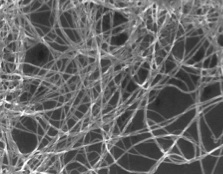
We have just heard that Alex’s manuscript into the formation of conductive self-assembled nanowires based on TANI-surfactants has been accepted for publication in JACS!  This study was a multi-researcher international collaborative effort, with contributions from Aalto University, Tsinghua University and the BCFN in Bristol!

Alex_LC1

More details to follow … but in the meantime congratulations to all who contributed!

Wei joining the FRG from Xi’an Jiaotong University

Wei, a China Scholarship Council exchange student, will spend one year in Bristol.  She follows in the footsteps of Jiangtao (Feng), also from the laboratories of prof Yan, who spent a year in Bristol in 2011.

Wei_crop

Close interaction and collaboration already exists between the Yan and Faul groups, with a number of publications generated in the area of oligo(aniline)-based nanomaterials (and more to come soon!).  Welcome to Bristol!