Paper published in Chemical Communications!

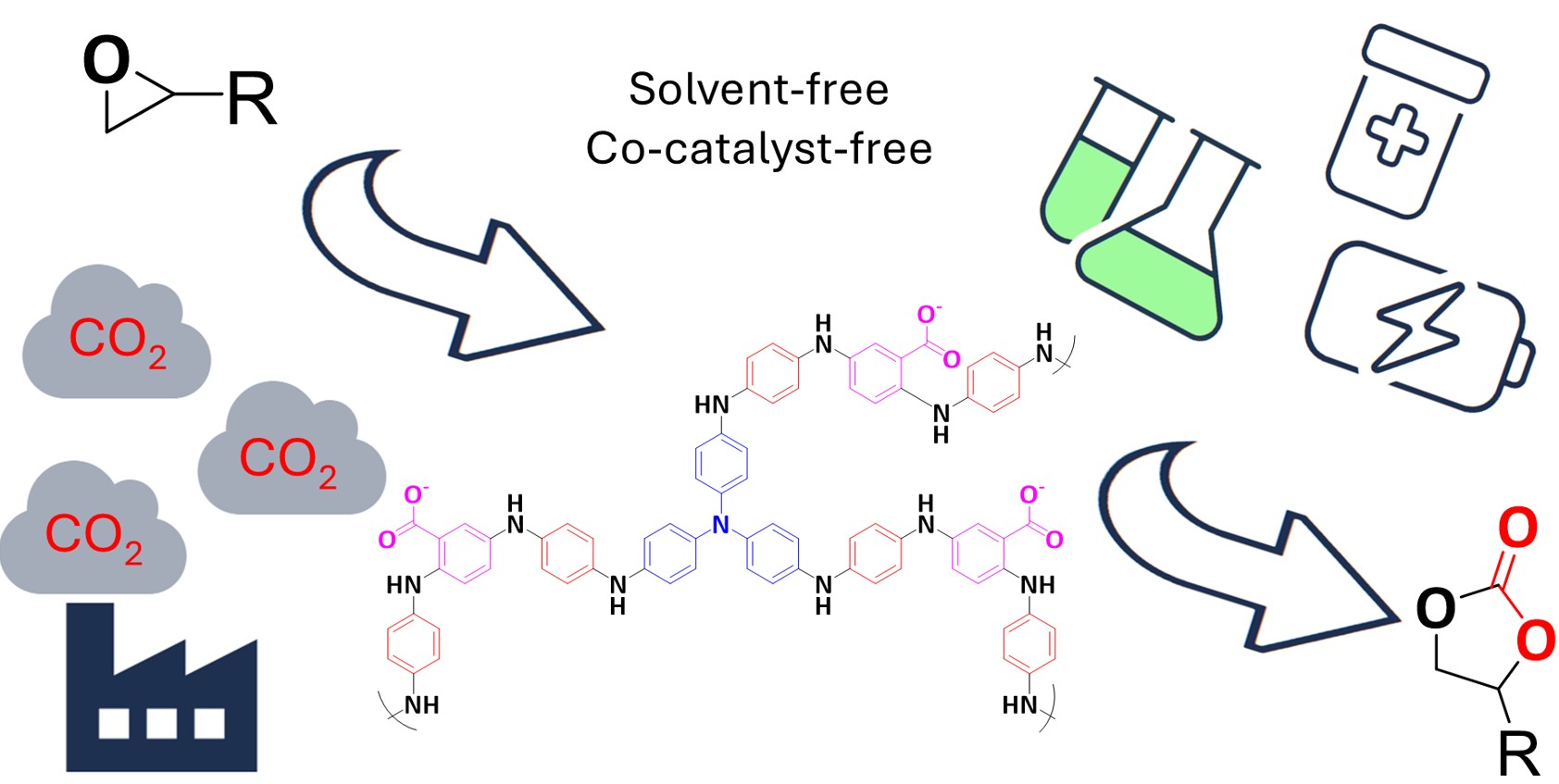
We are excited to share that a new research paper, “Functionalised Polyaniline-Based Porous Organic Polymers for Catalytic Conversion of CO2 into Cyclic Carbonates,” authored by Ulzhalgas Karatayeva and Charl F. J. Faul, has been published Open Access in Chemical Communications!

This work introduces a sustainable strategy for CO2 capture and conversion using carboxylic-functionalised polyaniline-based porous organic polymers. These materials enable the efficient production of cyclic carbonates with high conversion rates and excellent recyclability, all without the need for solvents or co-catalysts. This study highlights the potential of heterogeneous catalysts to advance green and cost-effective CO2 utilisation.

🔗 Click here to read the full paper!

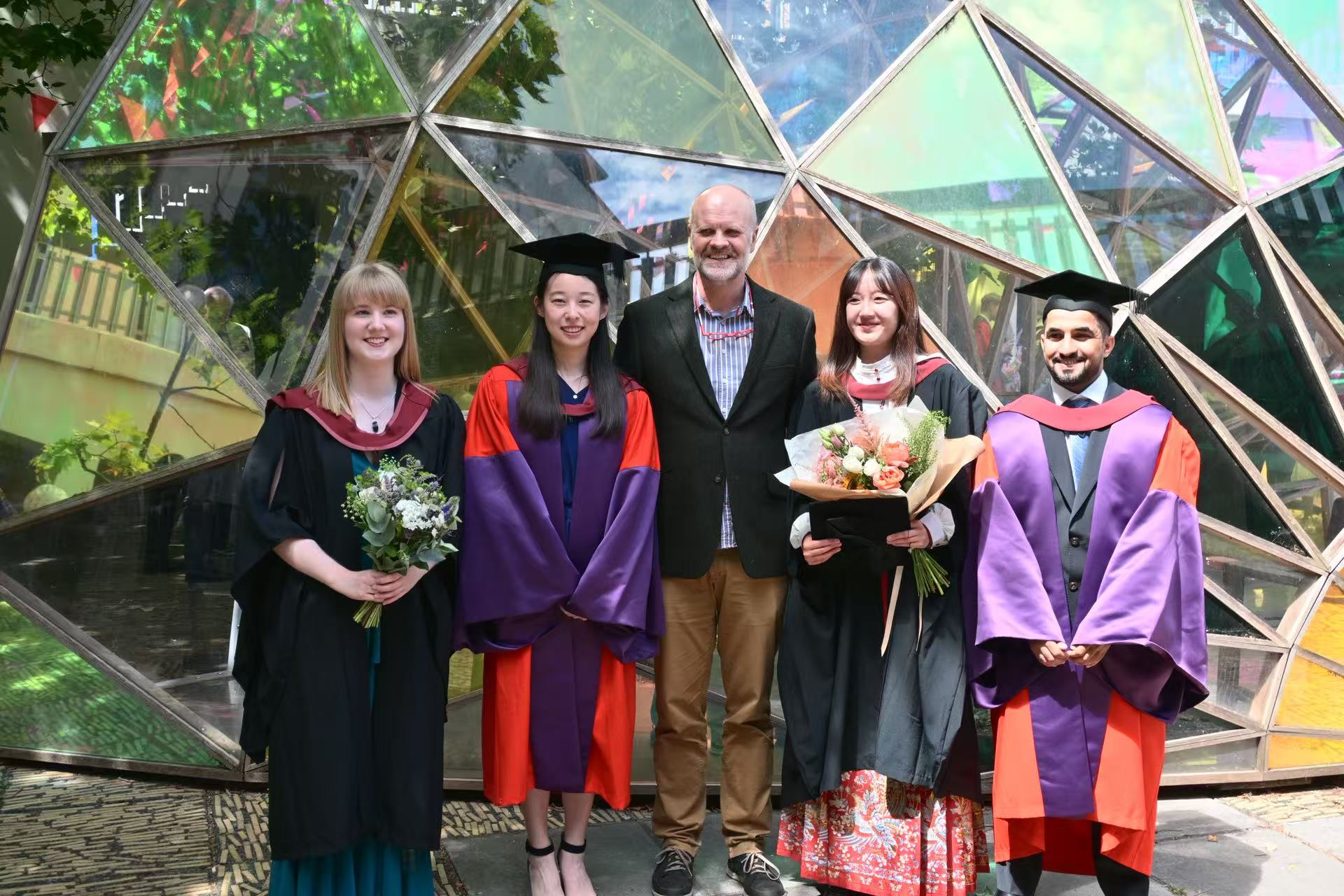
Faul Group Graduation 2025 !

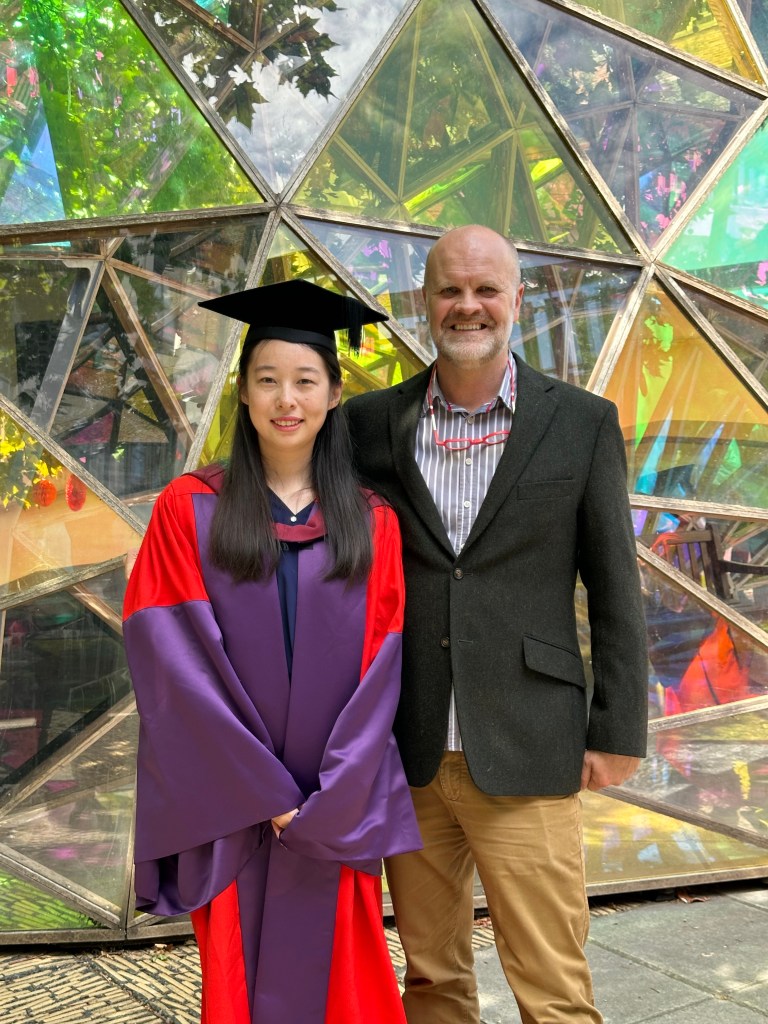
This July celebrates the success of Faul Research Group members and their graduation! Congratulations once again to Dr Helal Alharbi, Dr Xue Fang, Shaohua Li, Amelia Reay, Becca Rees-Porter, Freddy Walden, and Paige Barker!

Warmest wishes from all of us in the group, and the very best to their next chapters, whether in academia, industry, or beyond!

Review paper published in Int. J. Hydrogen Energy!

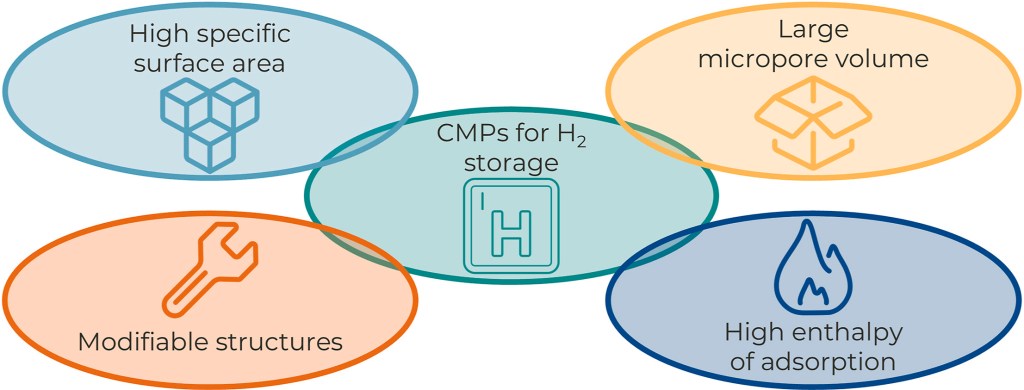
A new review paper titled “Exploring conjugated microporous polymers for hydrogen storage: A review of current advances” authored by John Worth, Valeska P. Ting, and Charl F. J. Faul, was recently published Open Access in the International Journal of Hydrogen Energy!

This extensive review offers design guidelines and insights to support the development of conjugated microporous polymers (CMPs) as physisorption-based materials for hydrogen storage, serving as a valuable reference for future research on the related fields. Check the paper for more details!

Prof. Will Dichtel (Northwestern) visiting the FRG!

Great to have Prof. Will Dichtel visiting Bristol. Will is the Timms Lecturer 2025 as part of our annual flagship materials chemistry symposium, the Timms Symposium (where Ulia gave an oral presentation, and most of the group presented posters!).

Will spent all of Tuesday afternoon with the group (chatting to most members individually!). Great afternoon to share, and a fantastic Timms Lecture yesterday!

Thank you Will!

Paper published in Chemistry – A European Journal!

A new paper titled “Self-Assembly, Aggregation Mechanisms, and Morphological Properties of Asymmetric Perylene Diimide-based Supramolecular Polymers” authored by Helal Alharbi, Xue Fang, Robert L. Harniman, Charl F. J. Faul, is recently published Open Access in Chemistry – A European Journal!

This study features in the synthesis of various asymmetric perylene diimide (PDI) derivatives and investigates the effects of hydrophilic and hydrophobic groups on the properties of the resulting supramolecular polymers (SMPs). The PDI self-assemblies were induced by THF/H2O mixtures as an optimal system and characterized via UV/Vis, AFM, and TEM, revealing the formation of nanofiber-based supramolecular structures that exhibit a coiling tendency. Check the link for more details!

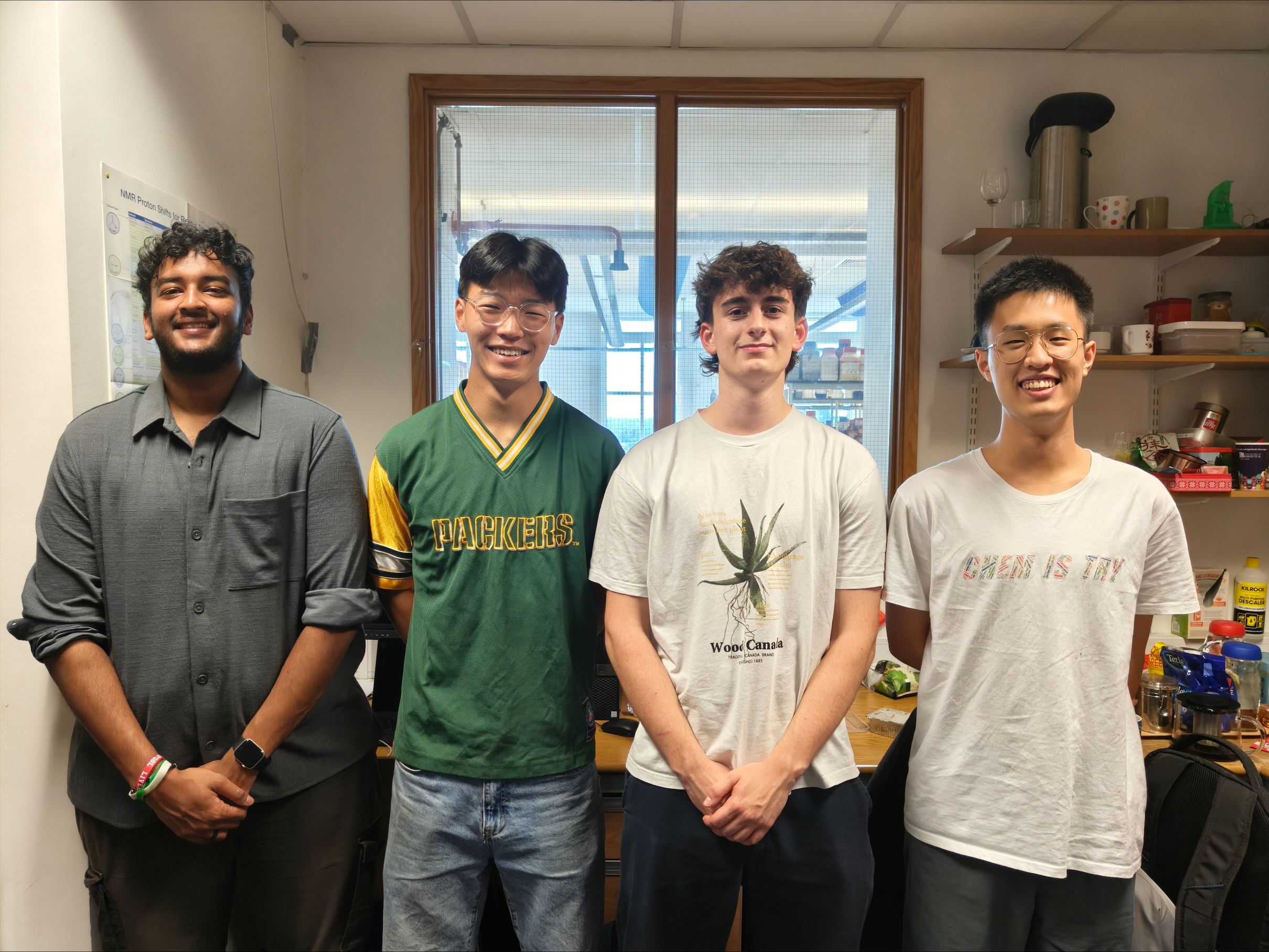
Welcome new summer interns to the group!

Since June, four new summer interns have joined the FRG to experience the exciting research on functional materials!

From left to right: Shahin Sharafudheen (University of Bristol, MSc, techno-economic data analysis of porous material applications), Alastair Chua (University of Bristol, BSc, perylene-based bio-adhesives), George Taffinder (Loughborough University, BSc, naphthalene-based polyimide porous material), and Feiyang Li (Tsinghua University, BSc, optimization of triazine-based porous material architectures).

Paper published in Advanced Materials!

A new paper titled “Electric Field Driven Soft Morphing Matter” authored by Ciqun Xu (former joint PhD student with Bristol Robotic Laboratory), Charl Faul, Majid Taghavi, and Jonathan Rossiter, is now published Open Access in Advanced Materials!

This study demonstrated an electric field-driven soft morphing matter, termed electro-morphing gel (e-MG), with extremely high morphological adaptability and complex multimodal electric field response. The remote-control strategy opens a wide range of applications in soft and bio-inspired robotics, dexterous manipulation, and space exploration. Check the supporting video for a cool swinging gymnast for more details!

Cyborg Futures – Royal Society Discussion Meeting

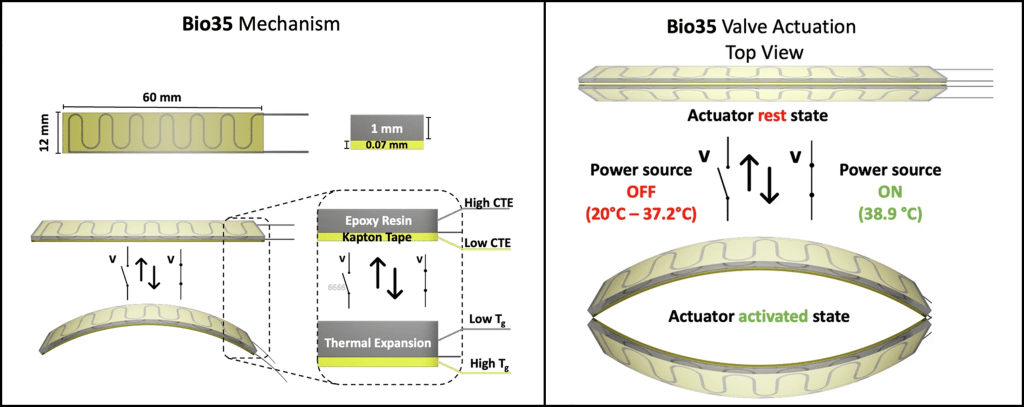
Ben, Junru and Charl are joining the exciting Cyborg Futures RS discussion meeting in London. Great opportunity to talk about our work related to soft actuators and bio-adhesives, and engage with many other scientists and engineers from a wide range of disciplines.

Thanks to Jonathan Rossiter and other colleagues for a great meeting in the heart of London!

Paper published in J. Mater. Chem. A

A new study entitled “One-pot scalable production of conjugated microporous polymers with exceptional functionality“, authored by collaborators from Engineering Research Centre of Reactive Distillation of Fuzhou University, John Worth, and Charl Faul, has now been published Open Access in Journal of Materials Chemistry A !

Here we report on a one-pot scalable synthesis method using autoclaves to produce conjugated microporous polymers (CMPs) with enhanced surface area and exceptional adsorption capabilities for CO2 and heavy metal ions. With degas-free and facile scale-up opportunities, this method opens real possibilities for wide industrial applications of CMPs.