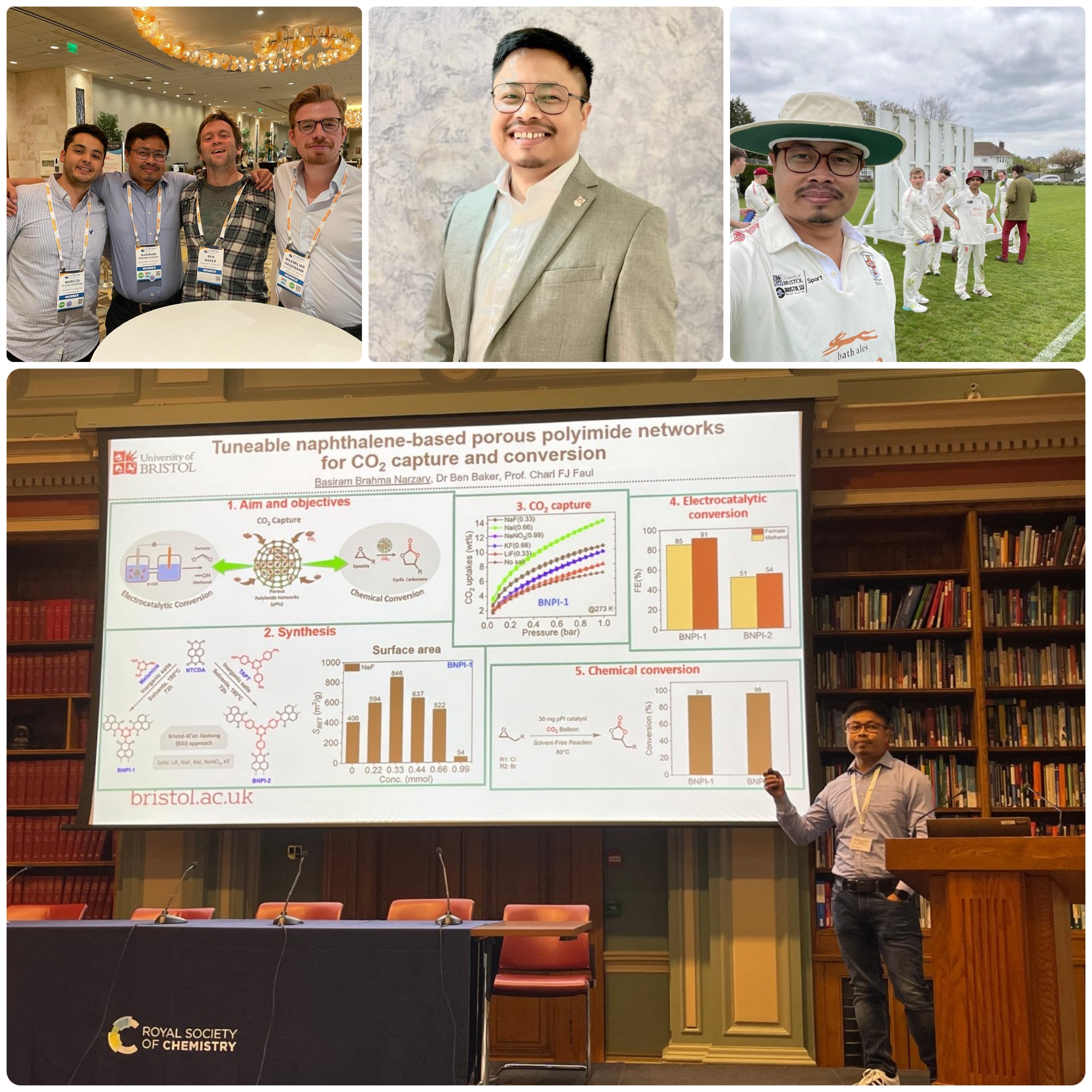
A massive congratulations to Basiram Brahma Narzary who passed his via on 17/10/2023 with minor corrections. With thanks to examiners Dr Sebastien Rochat and Prof. Arne Thomas for their time.
Work from Basiram’s PhD has been published as the following:
B.B. Narzary, B.C. Baker, N. Yadav, V. D’Elia, C.F.J. Faul, Crosslinked porous polyimides: structure, properties and applications, Polym. Chem. 12 (2021) 6494–6514. https://doi.org/10.1039/D1PY00997D.
B.B. Narzary, U. Karatayeva, J. Mintah, M. Villeda-Hernandez, C.F.J. Faul, Bifunctional metal-free porous polyimide networks for CO2 capture and conversion, Mater. Chem. Front. 7 (2023) 4473–4481. https://doi.org/10.1039/D3QM00639E.
Adéla Slavíková hails from her hometown of Tabor, Czech Republic. Her passion for sustainability and biomaterials led her to pursue a PhD under the guidance of Prof. Jiri Brozek at UCT Prague. Her research primarily revolves around the development, degradation, and application of polymers as biomaterials, with a specific focus on biodegradable polymers.
Adela joins the research group of Prof. Charl Faul as a visiting PhD student, undertaking a year-long internship as part of the emPOWER project. This collaborative experience promises to expand her knowledge and expertise in the field, allowing her to contribute to cutting-edge research and further her understanding of polymers’ diverse applications. Welcome.
Based at the CSIR-Indian Institute of Chemical Technology, India, John’s research team is highly dedicated to engaging in the development, creation, analysis, and utilisation of catalytic porous materials. Specific focus is given to porous organic polymers (POPs) and metal organic frameworks (MOFs). Their primary goal is to transform both fossil fuels (crude oil and natural gas) and sustainable resources (such as biomass) into transportation fuels, chemicals, and materials. Additionally, their more recent focus lies in catalysing the conversion of carbon dioxide (CO2) and the separation of water (H2O) into hydrogen (H2) and oxygen (O2).
More details on Dr. Mondal’s visit and the next generation international research development happening between institutions can be found on Bristol’s web page here. Dr. Mondal’s personal home page can be found here.
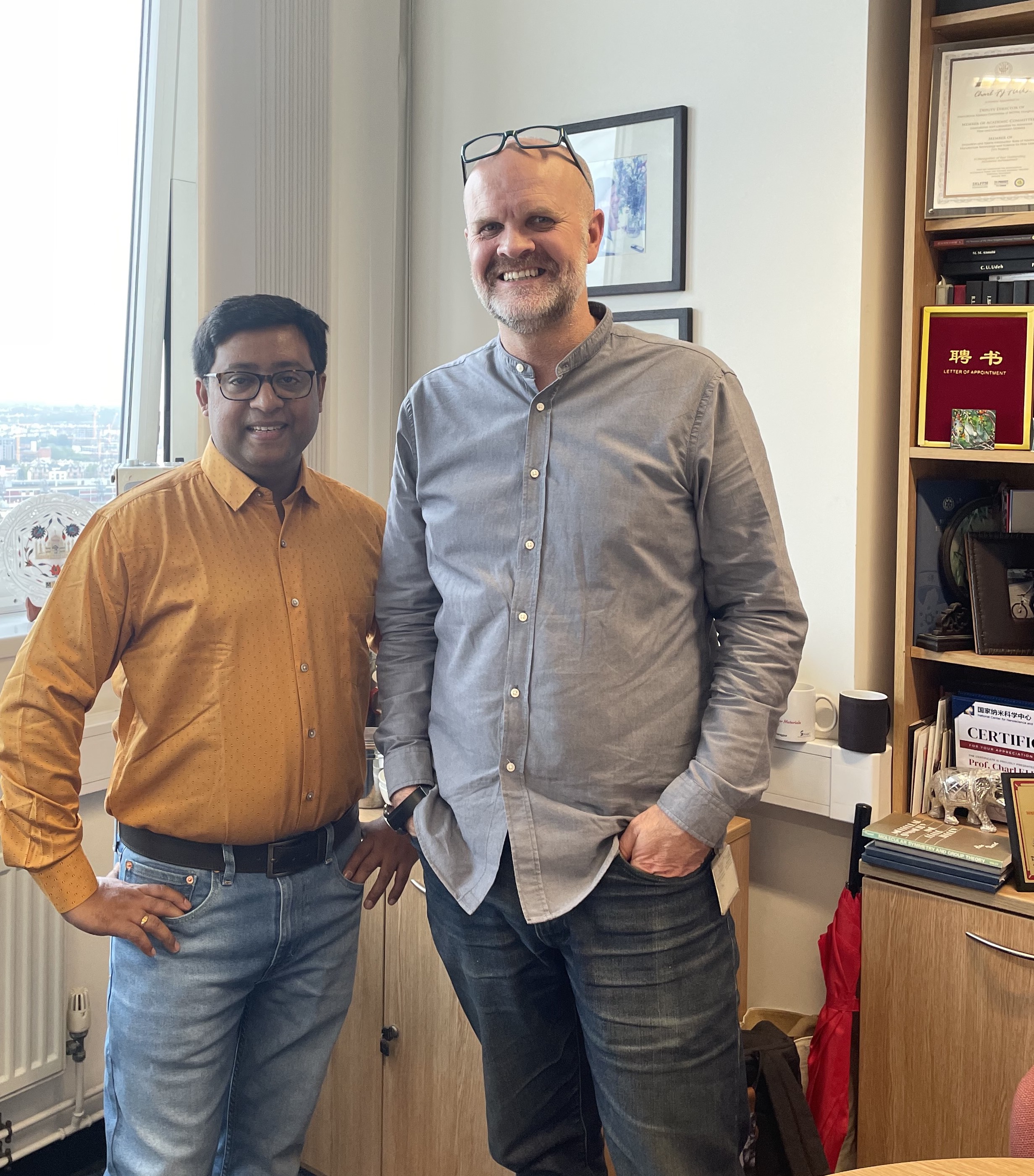
Welcoming Dr. Mondal (left) on his research visit from the CSIR-Indian Institute of Chemical Technology.
Prof. Faul has been named one of the four University Enterprise Fellows for the academic year 2023/2024. These fellowships aim to facilitate the potential commercialisation of research outcomes and intellectual properties from the Faul Group, as well as foster new connections with industry experts and potential investors.
I am delighted to be given this opportunity, through the University Enterprise Fellowship scheme, to explore commercialisation of our antibacterial materials from my laboratories.
I am aiming to use the time and released resources to have a much better understanding of the next steps in this commercialisation journey, whilst engaging with appropriate industry partners.
Prof. C. F. J. Faul
More details on the University of Bristol’s web page here.
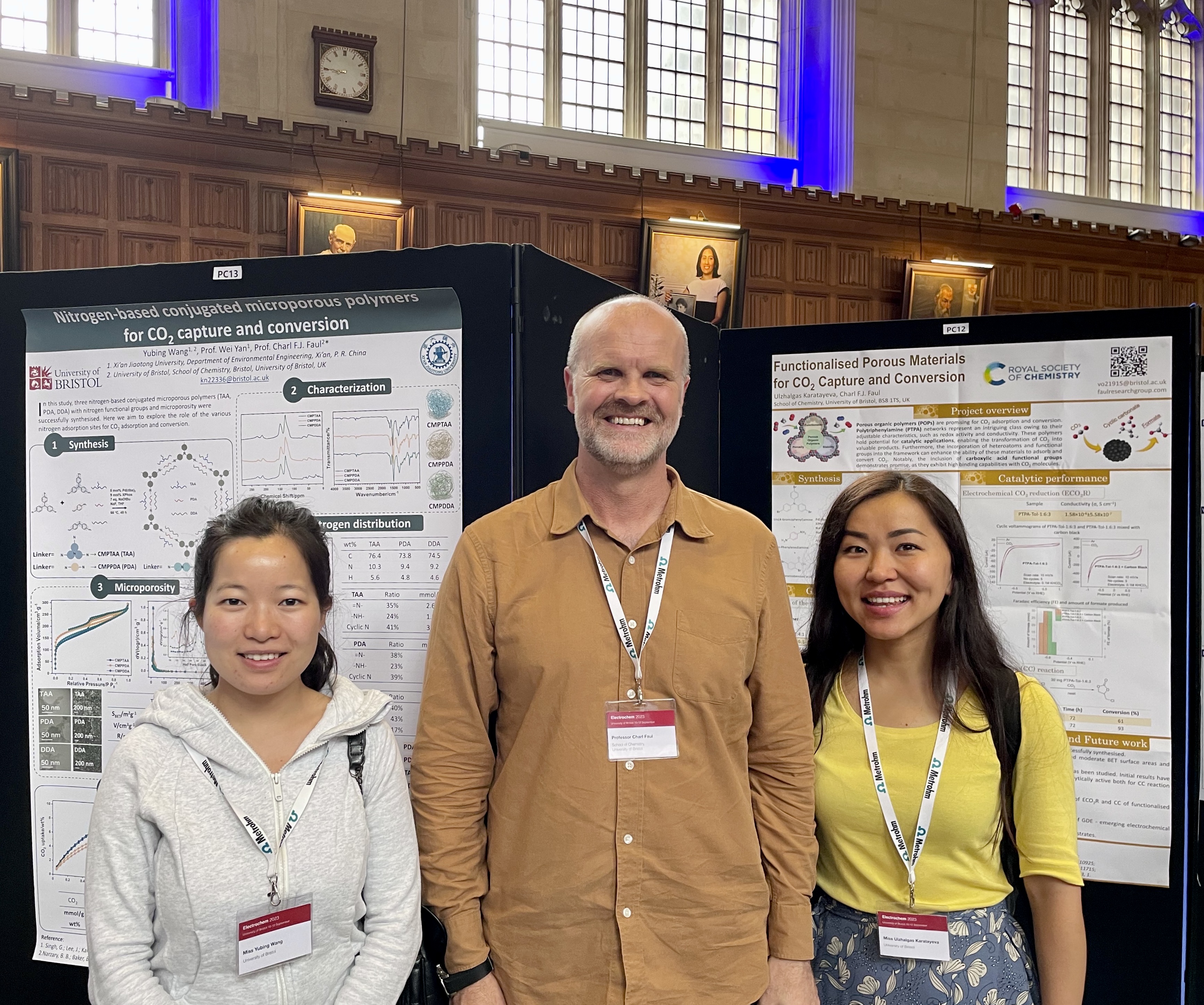
Yubing & Ulzhalgas showcasing their compelling research concerning redox active organic materials within the University of Bristol at September’s Electrochem conference alongside Prof Faul.
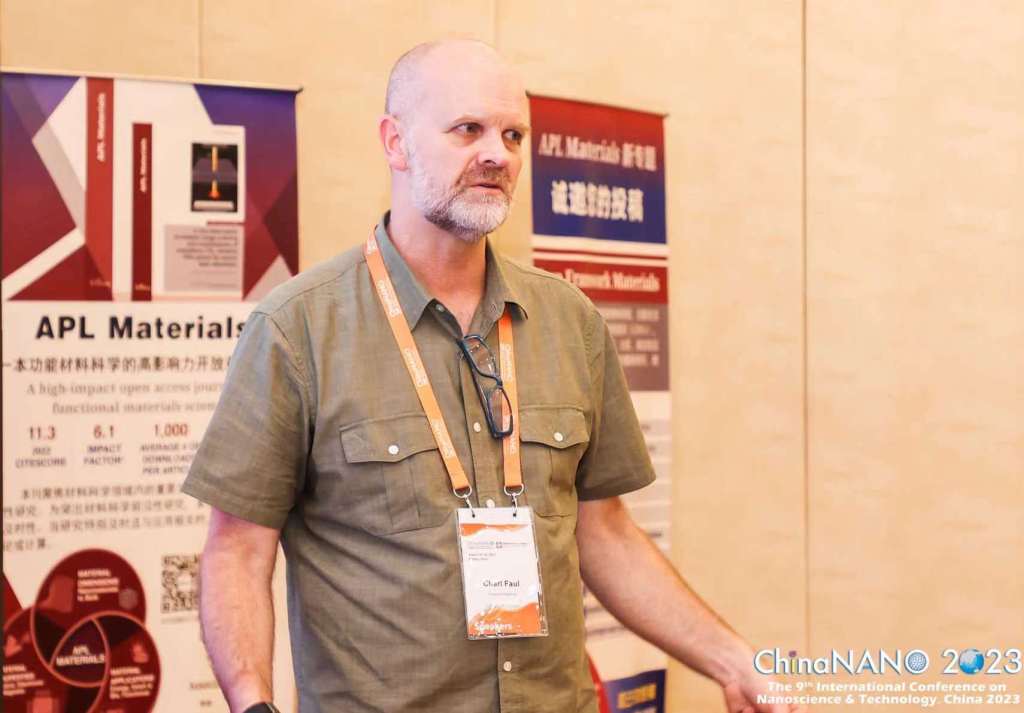
Charl spent a few days at ChinaNano23 – the 5th ChinaNano conference that he has attended. After a 4-year break it was wonderful to see old friends, and presentations on lots of exciting science!
What a great way to celebrate being able to get together and share science!
After almost 4 years, Charl is back in China, enjoying meeting collaborators, teaching, joining ChinaNano23, and visiting Chinese partner universities.
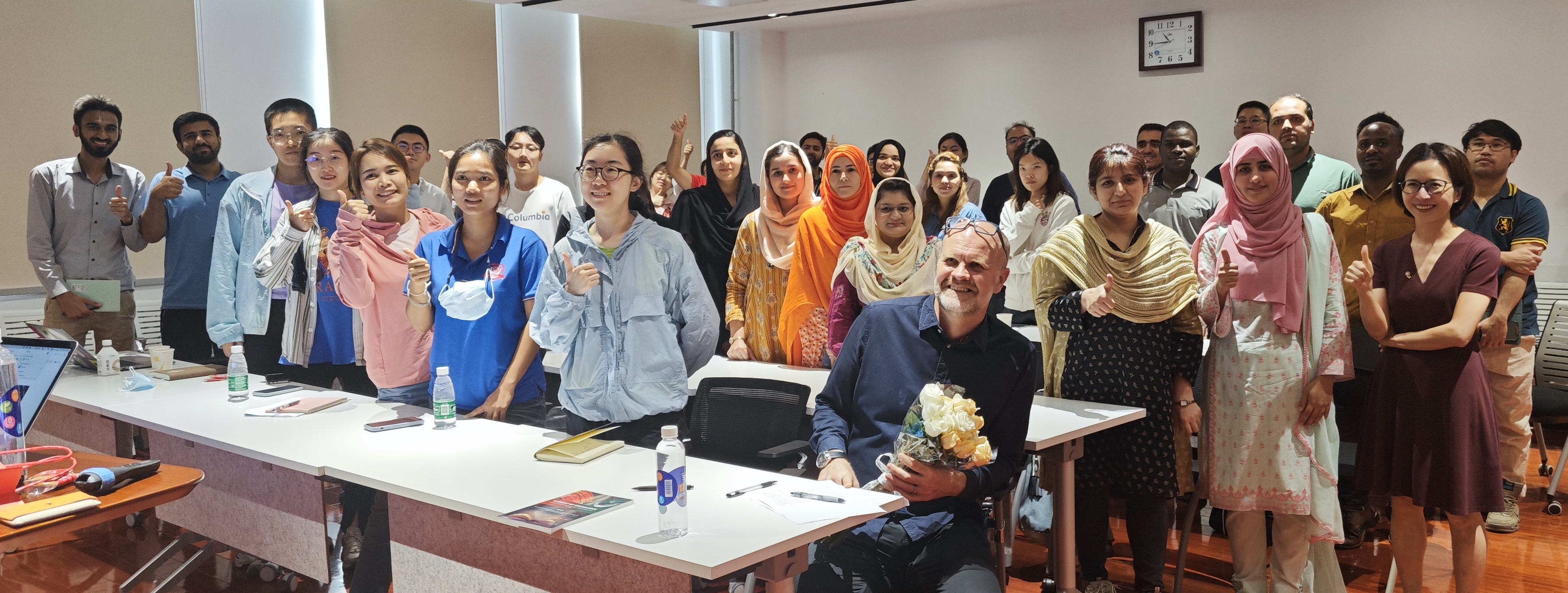
His trip has started on a high note with two days at the CAS National Centre for Nanoscience and Technology (NCNST) in Beijing, hosted by collaborators Prof Zhixiang Wei and Dr Kamran Amin. Charl spent two mornings with enthusiastic NCNST MSc and PhD students in interactive “From Project to Publication” workshop-style lectures.
Introducing visiting researcher Dr Kabir O. Oyedotun (left) from the University of Pretoria, South Africa. His research interests lie in the areas of carbon-based nanomaterials for supercapacitors and battery applications, including synthesis and characterisation. At present, Dr Oyedotun’s scientific research group develops new nanostructured carbon materials such as activated carbon, nanotubes, graphene and reduced graphene oxide, and onion-like carbon among others. He works on the hydrothermal synthesis of carbon nanostructures and composites along with applications of carbon nanomaterials for energy storage devices applications. He has co-authored and authored over 50 peer-reviewed papers in highly rated impact factor journals.
Elizaveta Bejan (right) is undertaking a summer intern project within the Faul Research Group funded by the prestigious Royce Undergraduate Research Internship Scheme before continuing her undergraduate studies on the MSci Chemistry course at the University of Bristol.





 Faul Research Group